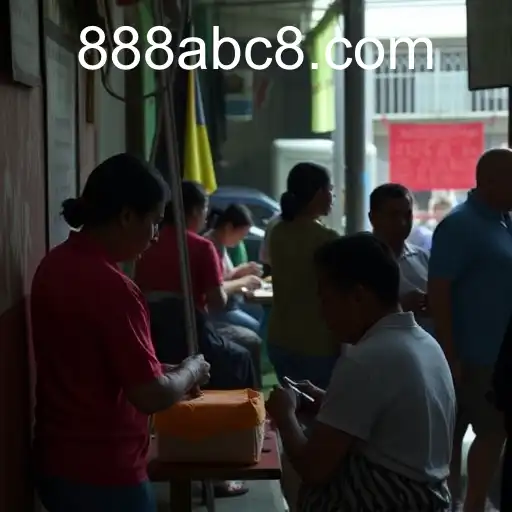
Unraveling the Mystique of Jueteng
Jueteng is a well-known numbers game in the Philippines, deeply ingrained in its culture despite being illegal. Over the years, it has evolved into more than just illicit gambling; it embodies a complex socio-political issue that intertwines with the lives of many Filipinos. Eminently prevalent in various parts of the country, particularly in the Luzon region, Jueteng serves as a peculiar bridge between the country's socio-economic classes.ph369
The Origins of Jueteng
The game's roots trace back to the colonial era where it emerged as a form of entertainment brought by Chinese settlers. Originally, it was a simple game relying on players betting on numbers drawn from a selection of 37 choices. The term Jueteng itself is believed to be derived from the Chinese words "huat" meaning prosperity, and "teng" meaning share, thereby symbolizing its gambling nature.EM777
Mechanics of the Game
Jueteng is a straightforward game. Players select a pair of numbers ranging from 1 to 37 or 1 to 40, depending on local variations. Each bet is collected by a 'kubrador', an on-ground operative who transacts directly with bettors. Winning numbers are drawn twice daily, and winners are announced through word of mouth and local networks. Despite its simplicity, the reach of Jueteng is extensive, often involving a multi-tiered network of collectors, coordinators, and financiers.ABC8
Socio-economic Impacts
Despite its illegal status, Jueteng persists largely due to the economic dynamics of the Philippines. For many Filipinos struggling for livelihood, Jueteng is seen as an opportunity for quick money. With minimal bets, bettors are drawn to the prospect of multiplying their money exponentially. This economic allure makes it a staple in communities, with some seeing it as a harmless pastime akin to the official lottery system.
However, its implications extend beyond mere economics. Jueteng affects societal structures, embedding itself in local governance and influencing political agendas. Its network provides certain communities with informal social security, assisting in financial emergencies. Yet, this also means that syndicates wield significant power, capable of influencing political decisions to protect their interests.
The Political Dimension
Over the decades, Jueteng has revealed its influence in political circles. In the Philippines, where political patronage is a widespread practice, the game becomes a tool for political leverage and election campaign financing. Allegations frequently emerge linking politicians to Jueteng operators, hinting at corrupt practices that further entrench its systemic hold on local governance.ph90
The interplay between Jueteng syndicates and politics became a national issue during the early 2000s when links between key political figures and gambling operators were publicly exposed. These affiliations sparked widespread debates, bringing Jueteng into the national spotlight, advocating for reform in regulatory practices to address the corruption it fosters.
Legal Battles and Public Perception
Successive administrations in the Philippines have attempted to tackle Jueteng through law enforcement and legislative measures. However, eradicating it has proven to be a daunting task due to its deep-rooted presence and the public’s lukewarm response to its criminalization.
The challenge lies not only in enforcement but also in shifting public perception. For many, Jueteng is seen as a vital part of daily life. While it may be illegal, the local police's leniency and the lack of stringent consequences contribute to its perseverance. Public tolerance persists due to the economic benefits Jueteng provides to lower-income participants, overshadowing potential legal repercussions.
ABC8: A New Era or Just Rebranding?
Among the new fronts emerging in the Jueteng saga is the introduction of ABC8, a platform styled similarly to Jueteng but marketed as a legitimate numbers game. It stands as a symbol of an ongoing attempt to transition traditional games into regulated enterprises.
ABC8's approach aims at formalizing the betting system, potentially steering it away from illegal status. By framing itself as a legitimate lottery-style system, ABC8 seeks to capitalize on Jueteng's popularity while complying with legal standards, thus bringing the vast unregulated market into the governmental fold where it could be taxed and monitored.
The Future of Jueteng
The persistence of Jueteng, despite sustained governmental efforts to eliminate it, indicates deep-seated cultural acceptance. Any future solution might require not only legal reform but also a socio-cultural shift. Enhancing economic conditions, education, and employment opportunities are pivotal in reducing dependency on such informal gambling activities.
Conversations about Jueteng inevitably touch on wider themes of governance, poverty, and social equity, making public discourse and policy intervention crucial. Whether initiatives like ABC8 represent genuine reform or merely a façade for continued operations under a regulated guise remains to be seen, but they hint at evolving strategies to address this longstanding issue.
The complexity of Jueteng reflects the intricacies of a society balancing tradition, necessity, and law, underscoring a need for multidimensional approaches in addressing its prevalence.WJ2